








China Top 10 Inflatable Boat Manufacturers
China has become a major sourcing base for inflatable watercraft, serving leisure, rescue, fishing, and tender markets. This guide examines China’s top 10 inflatable boat manufacturers through practical buying criteria. It focuses on construction quality, product range, customization, factory capability, and after-sales support.
The review considers materials such as PVC and Hypalon, along with seam finishing, air-valve design, floor systems, and transom strength. These details matter when an Infatable Boat faces sunlight, saltwater, repeated inflation, and rough handling. Factory experience also deserves attention. Years in the market can help, but experience alone does not prove consistent quality.
Documentation matters.
Where available, certifications, test records, material specifications, and export references provide stronger evidence than promotional claims. We also consider communication speed, sample procedures, production inspections, packaging, and warranty terms. A reliable supplier should explain limitations clearly, not simply promise the lowest price.
Some rankings remain subjective. Public information differs between manufacturers, and factory conditions can change over time. Therefore, this list should support supplier research, not replace independent verification. Buyers should request current samples, inspect welded seams, confirm capacities, and clarify compliance requirements before placing large orders. Small details can reveal larger problems. A neat catalog cannot guarantee dependable performance on the water. Through a balanced comparison, readers can identify suitable Chinese manufacturers and make more informed purchasing decisions.
Definition and Role of China’s Inflatable Boat Manufacturing Industry
China’s inflatable boat manufacturing industry covers the design, material processing, assembly, testing, and export of inflatable watercraft. It serves fishing, rescue, leisure, transport, and marine inspection. China’s Ministry of Industry and Information Technology reported that national manufacturing value added reached about 31.7 trillion yuan in 2023. Manufacturing also contributed 26.2% of the country’s GDP. These figures show the industrial foundation supporting inflatable boat production.
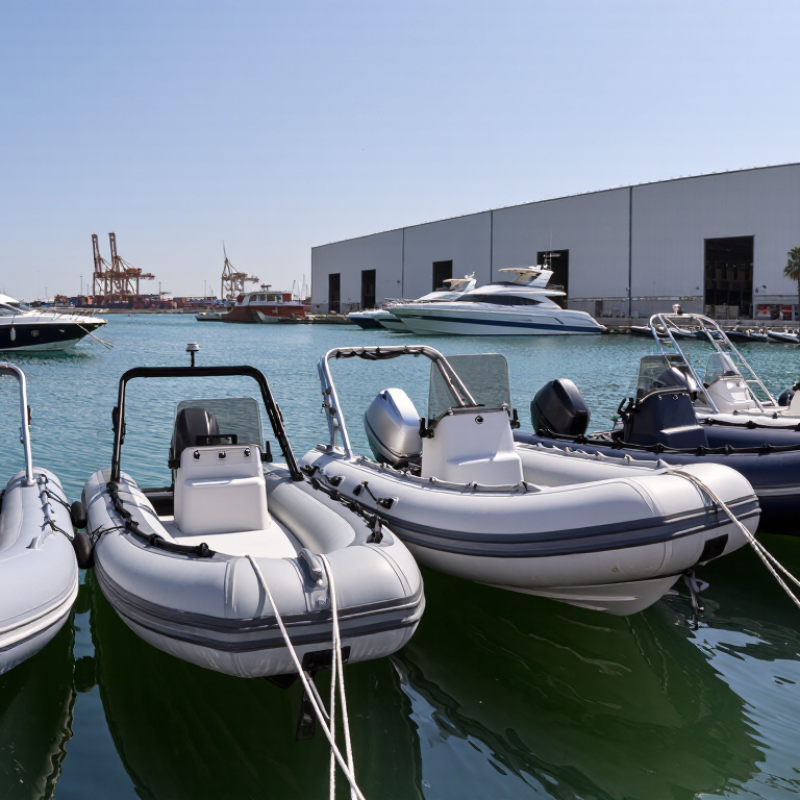
Production usually combines PVC or Hypalon fabric, heat-welded seams, aluminum or composite floors, valves, engines, and safety equipment. Suppliers can produce both compact tender boats and larger rigid inflatable boats. According to Grand View Research, the global inflatable boats market is expected to grow steadily through 2030. Demand is linked to tourism, coastal services, emergency response, and personal watercraft. Yet market estimates differ because research firms classify products differently. That weakness deserves attention.
Tips: Check fabric thickness, seam quality, valve design, load capacity, and after-sales testing records. Ask for material certificates and sample inspections. A low price can hide thinner fabric or weaker bonding. Field experience matters. Test before scaling orders. China’s role is significant, but quality control remains uneven among smaller workshops. Buyers should compare documented performance, not only catalog photographs.
