
















How to Use Red Face Light Therapy Safely?
Red Face Light Therapy is increasingly used in home skincare routines, yet safe use requires more than switching on a device. Red and near-infrared wavelengths may support cellular activity and reduce the appearance of mild redness, but results vary between individuals. Skin type, device strength, treatment distance, and session length all matter.
Dr. Michael R. Hamblin, a leading photobiomodulation researcher, has stated, “The mechanisms of action of photobiomodulation are not fully understood.” That caution is important. Red light therapy is promising, but it is not a guaranteed cure for acne, rosacea, wrinkles, or persistent inflammation. A careful user should follow the manufacturer’s instructions, keep the device away from wet surfaces, and avoid extending sessions for faster results.
Protect your eyes.
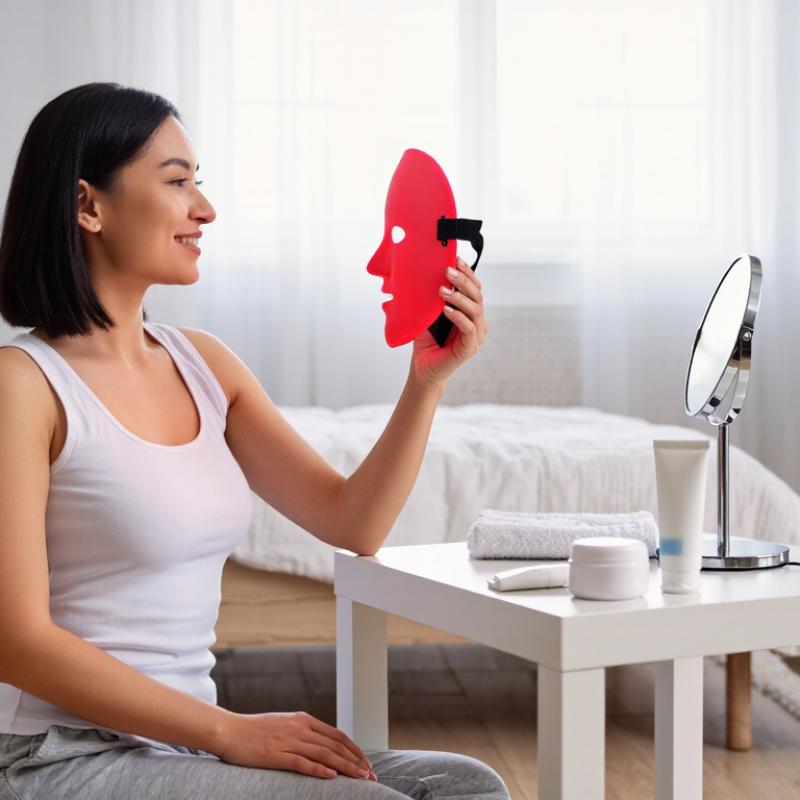
Before using Red Face Light Therapy, check whether you take photosensitising medication or have a condition that reacts strongly to light. A dermatologist can help assess those risks, especially when redness is painful, spreading, or accompanied by swelling. Clean, dry skin is usually the simplest starting point. Hold the panel or mask at its recommended distance, and record redness, warmth, or irritation after each session.
Some guidance remains imperfect. Device specifications differ, and many consumer products lack strong long-term clinical data. That uncertainty deserves attention. Stop treatment if burning, blistering, unusual pigmentation, or lasting discomfort appears. A gentle routine, realistic expectations, and professional advice create a safer foundation for exploring this technology.
Understanding How Red Light Therapy Works
Red light therapy uses low-intensity red or near-infrared light to interact with cells. Red wavelengths usually reach the skin’s surface, while near-infrared wavelengths may travel deeper. Some research suggests this light can influence mitochondria, the structures that help cells produce energy. The process may support cellular signaling, circulation, and tissue repair. However, results vary between people. More light does not always mean better results.
Safe use begins with realistic expectations. Follow the device instructions, including treatment distance and session length. Clean, dry skin is usually easier to treat evenly. Protect your eyes when the instructions recommend it, especially with bright panels or near-infrared light. I once assumed longer sessions would improve results faster, but that assumption is not well supported. Skin may become warm or irritated when exposure is excessive. Stop if you notice pain, persistent redness, or visual discomfort. People using light-sensitive medicines, or managing eye and skin conditions, should ask a qualified healthcare professional before treatment. Device quality and wavelength accuracy also matter, yet home products are not always consistent. Keep a simple record of session time and skin reactions. That small habit can reveal patterns that memory misses.
How to Use Red Face Light Therapy Safely? – Understanding How Red Light Therapy Works
