












How to Choose the Best Orthopedic Power Tool?
Choosing the best Orthopedic Power Tool is not about selecting the fastest motor or the highest price. It is about matching controlled performance with the surgical task, patient anatomy, and operating-room conditions. A saw used for bone cutting should offer stable oscillation, predictable torque, and minimal vibration. A drill should provide accurate speed control, reliable cooling, and a secure chuck. Small details matter. Grip comfort matters.
Prof. Thomas P. Rüedi, a respected orthopedic trauma authority, stated, “The aim of fracture treatment is to restore function.” That principle should guide every tool decision. A device is valuable only when it supports precise preparation, protects surrounding tissue, and helps the surgeon work consistently. Marketing claims cannot replace clinical evidence, sterilization compatibility, service support, or training.
Look closely at the tool’s weight during a simulated procedure. Notice how the handpiece feels after several minutes. Check whether the battery indicator remains clear beneath bright surgical lights. Review cleaning instructions before purchase, not after the first case. It is easy to overlook maintenance.
Performance is only one part of reliability. Surgeons and procurement teams should compare torque, noise, vibration, battery life, attachment options, warranty coverage, and emergency repair access. Their needs may differ. A trauma surgeon may prioritize power and rapid attachment changes, while a joint specialist may value precision and low vibration.
There is no perfect choice. Even experienced teams can misjudge workflow demands. A careful trial, documented feedback, and honest review of limitations usually produce a safer, more practical Orthopedic Power Tool decision.
Understanding Orthopedic Power Tool Types and Their Clinical Uses
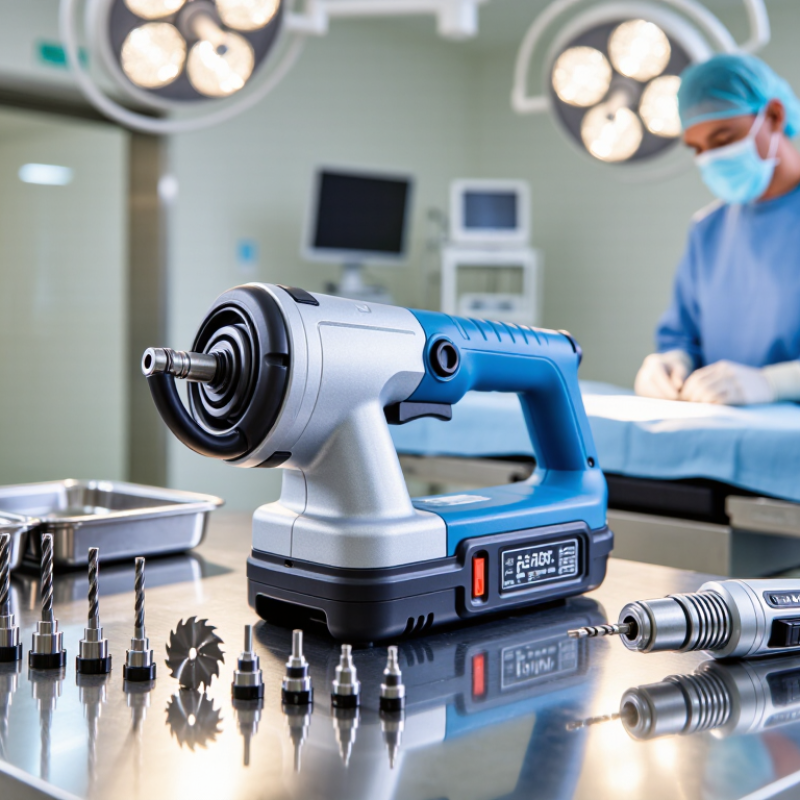
Choosing an orthopedic power tool begins with its clinical purpose, not its appearance. Electric and pneumatic systems can drive drills, saws, reamers, and wire instruments. Each type delivers different torque, speed, vibration, and handling characteristics. A high-speed drill may prepare a pilot hole, while a reamer enlarges a canal during reconstructive surgery. An oscillating saw supports controlled bone cuts with less rotational movement. The fit matters.
Clinical use should guide every specification. Compact drills can improve access around small joints and narrow operative fields. Larger systems may provide steadier power during trauma fixation or joint replacement procedures. Battery-powered tools reduce tubing and cable clutter, but battery status requires careful checking. Pneumatic tools can offer consistent performance, yet their hoses may restrict movement. Surgeons and operating teams should assess grip comfort, trigger control, noise, irrigation options, and vibration during realistic simulations.
Sterilization compatibility and maintenance records deserve equal attention. A tool that feels efficient may still create delays if cleaning is complicated. Follow the manufacturer’s instructions and applicable hospital protocols. Training should include attachment changes, overheating risks, blade selection, and emergency manual alternatives. Small details matter. I would not choose a device from specifications alone; hand fatigue and visibility can change performance during a demanding case. Clinical feedback is valuable, although personal preference should never replace documented safety evidence, qualified training, or procedure-specific risk assessment.
